
Glossary
Pest Control Glossary
Frass, swarmer, harborage, exclusion: the words pest pros use, explained in plain English. Search or scroll.
- Alate
- A winged reproductive ant or termite, the kind that swarms in spring.
- Bait station
- A tamper-resistant box or in-ground device that holds bait for rodents, ants or termites.
- Brood
- The eggs, larvae and pupae of an insect colony, usually kept deep inside the nest.
- Colony
- A group of social insects such as ants or termites that live and work together.
- Crack and crevice treatment
- A small, targeted application into cracks, voids and hiding places, not a broad spray.
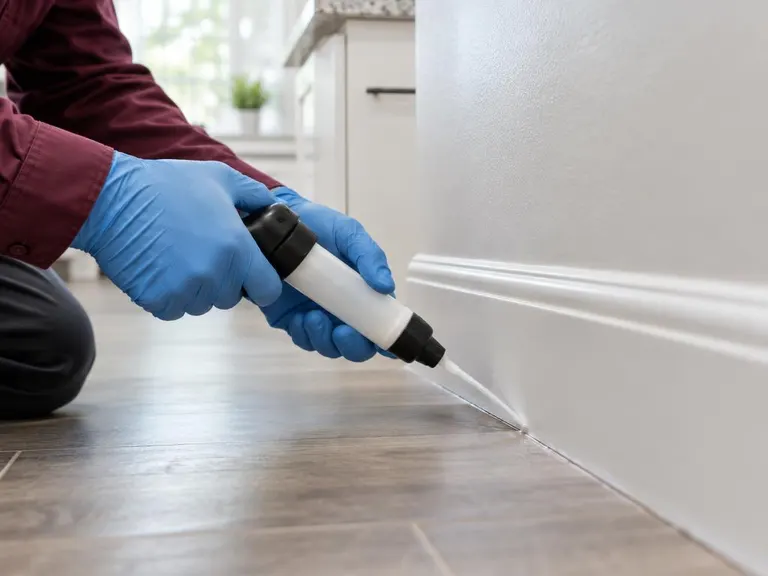
- Exclusion
- Sealing and repairing gaps so pests cannot get in, one of the most lasting fixes.
- Frass
- Insect droppings or wood dust left by wood-boring insects such as carpenter ants and bees.
- Gel bait
- A slow-acting bait applied in small dots where insects travel and feed.
- Glue board
- A sticky trap used to monitor or catch insects and rodents.
- Harborage
- A place where pests hide and nest, such as behind an appliance or in a crawl space.
- IGR
- An insect growth regulator, a product that stops young insects from maturing and breeding.
- Integrated pest management
- A plan that combines inspection, sealing, sanitation, monitoring and careful treatment, using the least that works.
- Larvicide
- A treatment that stops mosquito larvae in water that cannot be drained.
- Monitoring station
- A trap or bait box checked on a schedule to see what pests are present.
- Mud tube
- A pencil-width tunnel of soil that termites build to travel between the ground and wood.
- Nymph
- A young insect, such as a cockroach or a tick, that looks like a small adult without full wings.
- Ootheca
- A cockroach egg case, a small, brown, bean-shaped capsule.
- Pantry pest
- A beetle or moth that lives in dry food such as flour, cereal and pet food.
- Perimeter treatment
- A protective band of product at the foundation, doors, windows and eaves.
- Pheromone trail
- A scent trail that ants leave so others can find food.
- Pre-construction treatment
- Termite protection applied to the soil before a slab or foundation is covered.
- Pupa
- The resting stage between larva and adult in many insects.
- Re-entry interval
- The time to stay out of a treated area, as stated on the product label.
- Residual
- A treatment that keeps working on a surface for some time after it dries.
- Rub marks
- Greasy smudges along walls and pipes where rodents travel again and again.
- Sanitation
- Cleaning, trash and food-storage habits that remove what pests feed on.
- Sill plate
- The wood that rests on the foundation and holds up the walls, a key spot to inspect for termites.
- Subterranean termite
- The most common termite in Tennessee, living in soil and traveling to wood through mud tubes.
- Swarmer
- A winged termite or ant that leaves the colony to start a new one.
- Tamper-resistant
- Designed so children, pets and wildlife cannot open it, as with a rodent bait box.
- Vapor barrier
- A plastic sheet over crawl space soil that keeps ground moisture from rising.
- Void
- A hollow space inside a wall, ceiling or floor where pests can hide.
- WDI report
- A wood-destroying insect inspection report, often asked for in home sales and refinancing.
- Weep hole
- A small opening at the base of brick that lets water out and sometimes lets insects in.
- Wolf spider
- A large, fast, hairy ground spider that hunts instead of building webs, usually harmless.
No term matches that search. Try a shorter word.
Still have a question?
Describe what you are seeing and we will explain it in plain English.